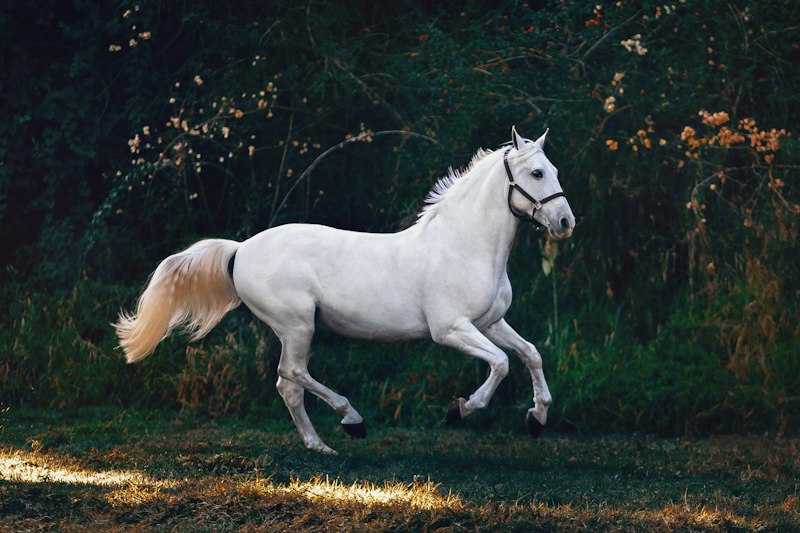
Ocala and Marion County call themselves the Horse Capital of the World. It is a marketing title, but it rests on something real: a landscape suited to raising horses, a thoroughbred history that produced champions, and an equestrian industry that today spans nearly every discipline. For luxury buyers, that history explains much of the character of the place.
It starts with the land. Marion County sits on limestone, and that geology is widely credited with the mineral-rich water and pasture that horsemen value for raising young horses. Combined with a long growing season and well-drained sandy soils in much of the county, it made the area a natural fit for breeding farms. The rolling pastures and board fences of northwest Marion are the visible result.
Thoroughbreds built the reputation. Breeding farms took root in the mid-twentieth century, and Ocala soon had champions to point to. Needles, raised in Ocala, became the first Florida-bred horse to win the Kentucky Derby in 1956. Affirmed, foaled at Harbor View Farm in Ocala, won the Triple Crown in 1978. Those horses put Marion County on the national map, and the breeding and training industry grew around them. Today the Ocala Breeders' Sales Company holds auctions that draw buyers from around the world, and training centers with their own tracks dot the county.
The industry diversified. Over the decades, hunter and jumper, dressage, eventing, driving, western, and other disciplines established themselves here, drawn by the same land, the climate, and a growing network of veterinarians, farriers, and suppliers. HITS Post Time Farm, the Florida Horse Park, and Live Oak International added competition venues. That diversity means Ocala's equestrian economy does not depend on a single discipline.
The World Equestrian Center changed the scale. Opened in 2021 on the west side of Ocala, WEC brought a large, year-round venue with covered and outdoor arenas, an on-site hotel, dining, and an expo center. It attracts competitors and visitors who had little previous connection to the area, and its effects on surrounding land, businesses, and real estate are still developing.
What it means for luxury buyers. First, equestrian property here sits within a deep, specialized market of buyers and professionals who understand barns, fencing, footing, and land, which supports liquidity for well-built farms, though it does not guarantee values. Second, the services that make horse ownership practical are close at hand, from equine veterinarians to arena builders. Third, the landscape itself, with its pastures, oak canopy roads, and open space, shapes daily life for everyone, including buyers who never ride.
For many people who move here, that is the real appeal. Ocala is not a resort built around horses. It is a working horse country with a long history, and luxury homes here sit inside that landscape rather than apart from it.