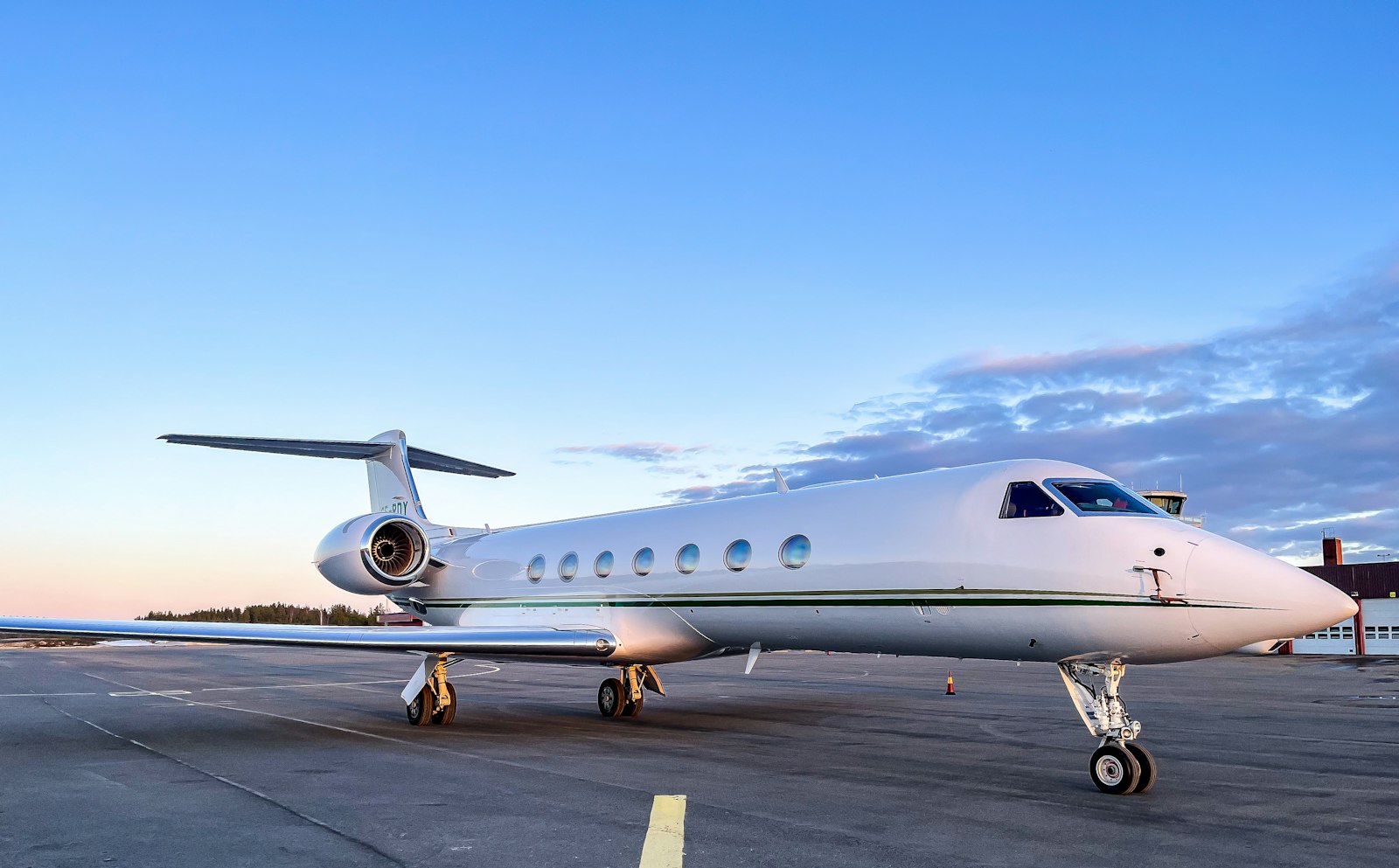
Most people who own a beautiful home in Ocala eventually notice the airplanes. They pass low over the farms west of town in the mornings, climbing out of the airport on the southwest side, and on a clear winter day you can watch the same small Cessna practice landings again and again until the pattern looks effortless. That airplane is usually a student. And for a certain kind of person, the one who has built a business, raced a car, or ridden a grand prix course, the question arrives quietly: why not me? The answer, in Ocala, is that the conditions are about as good as they get, and the path is clearer than most people expect.
Why winter is the season to begin
Learning to fly is a matter of repetition, and repetition depends on weather. Florida summers bring the afternoon thunderstorms that pilots plan around every day. The cooler months tend to offer the steadier mornings and longer stretches of flyable days that let a student keep momentum, and momentum is what turns a collection of lessons into a skill. Start in November, and the bulk of the training can fall inside the same months the World Equestrian Center fills its show rings and the region is at its most social.
The airport itself is part of the case. According to the FltPlan.com airport directory, Ocala International Airport, Jim Taylor Field, has a primary runway of 7,467 feet with an instrument landing system, a second runway of 3,009 feet, and a control tower that operates from 7 a.m. to 8 p.m. local time. That tower matters to a student in a very specific way, which we will come to.
What the FAA actually requires
The private pilot certificate is the foundation of everything else in general aviation, and its minimums are written plainly in federal regulation. Under 14 CFR 61.109, an applicant for a single-engine airplane certificate must log at least 40 hours of flight time, including at least 20 hours of flight training from an authorized instructor and 10 hours of solo flight.
Within those hours, the regulation asks for specific experience:
- 3 hours of cross-country flight training
- 3 hours of night training, including a cross-country flight of more than 100 nautical miles and 10 takeoffs and 10 landings to a full stop
- 3 hours of flight training by reference to instruments alone
- 3 hours of preparation for the practical test with an instructor, within the two calendar months before the test
- 5 hours of solo cross-country time, including one solo flight of 150 nautical miles total with full-stop landings at three points and one leg of more than 50 nautical miles
- 3 solo takeoffs and landings to a full stop at an airport with an operating control tower
That last line is why Ocala's tower is worth mentioning. A student based at a towered field meets the requirement at home, every week, as a matter of routine, and learns to speak with air traffic control from the first lesson rather than as a special trip later.
The 40 hours are a floor, not a forecast. Many students need more, and the honest way to budget is by milestones rather than by the minimum. The regulation also allows some instrument time in an approved simulator or flight training device to count toward the total, within limits.
I tell people the certificate is the easy part to describe and the hard part to rush. The ones who enjoy it most treat it like learning a new language, not passing a test.
The medical question, answered early
Before the first solo, a student pilot needs to settle the medical side, and it is worth doing at the very beginning. The traditional route is an FAA medical certificate issued by an aviation medical examiner. There is also BasicMed, an alternative that many private pilots use once they qualify.
According to AOPA's guide to BasicMed, a pilot must have held a valid FAA medical certificate at some point on or after July 15, 2006, which means a pilot who has never held one needs an FAA medical from an examiner one time. After that, BasicMed asks for a visit to a state-licensed physician with the FAA's checklist at least once every 48 months, and a free online medical self-assessment course every 24 months. AOPA lists the operating limits as well: aircraft of no more than 12,500 pounds maximum takeoff weight, no more than six passengers plus the pilot, altitudes up to 18,000 feet, speeds up to 250 knots, and no flying for compensation or hire. AOPA also notes that BasicMed operations are limited to the United States, Mexico, and the Bahamas unless another country authorizes them, which keeps the islands within reach.
Medical rules have nuance, and some conditions require special issuance. The right first call is to an aviation medical examiner, before you invest in training.
Where to train on the field
Ocala International has more than one training option, and the choice of school shapes the experience as much as the airplane does.
Epic Flight Academy announced its Ocala location in April 2022, describing it in a press release as the company's first satellite location, at the airport on SW 60th Avenue. The school's own Ocala page describes it as an FAA-approved Part 141 flight school, training in Cessna 172 Skyhawks with Garmin G1000 glass cockpits, with a Piper Seminole for multi-engine training and a simulator on site. PRP Aviation, also on the field, lists flight training alongside private charter, aircraft maintenance and repair, and aircraft sales and management.
A Part 141 school follows an FAA-approved syllabus. Part 61 training, which many independent instructors offer, follows the same regulation's minimums with more flexibility in sequence. Neither is better in the abstract. What matters is the instructor, the scheduling, and how well the program fits a life that includes a business, travel, and a season of commitments. Visit more than one operator, fly a discovery flight, and ask about instructor turnover and aircraft availability before you commit. Nothing here is an endorsement of any one school.
The hangar comes next
Owners who finish their certificate often find that renting airplanes is only the first chapter. That is where the hangar becomes the real question.
According to the City of Ocala, Ocala International has 8 T-hangar buildings with a total of 101 individual units. A revised waiting list policy took effect March 17, 2025, and joining the list requires a T-hangar lease interest form and a $250 refundable deposit. The city's listed rates, effective November 1, 2025 and before tax, are $340.48 for a 1,000 square foot small unit, $427.82 for a 1,250 square foot medium unit, and $562.30 for a 1,700 square foot large unit. Larger aircraft are a conversation with the airport and the fixed base operator. Anyone who expects to own an airplane should get on the list early, because the timing of a hangar rarely matches the timing of a purchase.
Aircraft ownership raises its own questions about structure, registration, insurance, and taxes. Those belong with an aviation attorney, a CPA, and an aviation insurance professional, and they are worth answering before the airplane, not after it.
The Ocala estate for this life
A student pilot flies two or three times a week, often early in the morning. The estate that suits that rhythm is the one where the drive to the airport is short and easy at the hour you would actually leave.
The west side of town is the natural starting point. Golden Ocala sits beside the World Equestrian Center, a short drive north of the airport, and our guide to luxury homes near WEC compares the communities closest to both. Ocala Preserve, in northwest Ocala, offers a newer setting a little farther from the field. For those who want room for a workshop, a car barn, or the future possibility of a private strip where zoning allows it, our guides to luxury homes with acreage in Ocala and to the best areas in Ocala for acreage estates explain how those properties are evaluated.
For the owner who decides one day that a hangar at the airport is not close enough, Marion County has a residential fly-in community, Jumbolair, northeast of downtown, which our earlier piece on private flying from Ocala describes in detail. And for owners who would rather design the house around the hobby, with the office, the garage, and the guest quarters planned from the start, our page on custom luxury homes in Ocala is the place to begin.
A private conversation
If you have been watching those airplanes over the farms and wondering what it would take, I would be glad to talk it through, from the drive time to the field at seven in the morning to the estates that make an early lesson easy. I was born and raised in Marion County, and I can show you how the west side of Ocala works on an ordinary weekday, which is when you will be flying. Call or text 352.303.9050, write to cristian@homesinocalaflorida.com, or book a private conversation at calendly.com/cristian-homesinocalaflorida/30min.